✕
Ready to grow your bussiness?
Let's schedule a call to discuss your needs

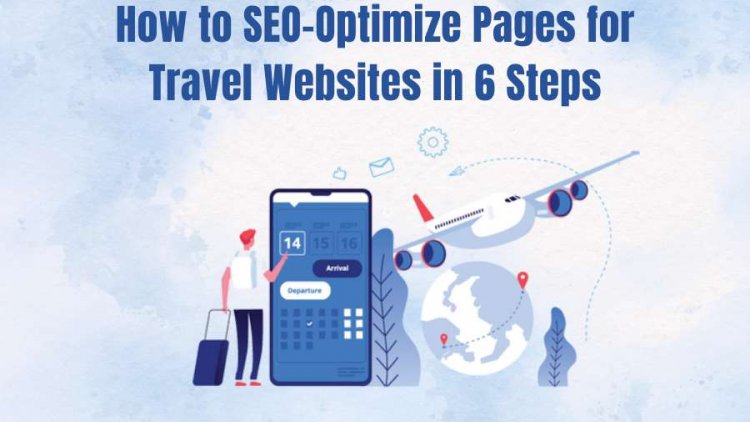
The Travel Industry is one of the most Competitive Digital Markets with Millions of companies competing for Users’ Attention. If you run a travel company, there are many things that you can do to drive traffic to your travel website beyond creating a nice-looking site. You can boost natural visitors to the travel business through optimizing your website for search engines. The SEO-optimized pages help your travel business rank higher on Google, attract qualified visitors, and convert them into bookings. In this guide, our website design company breaks down six proven steps to SEO-optimize travel website pages effectively.
Discover how to increase the rankings of your travel website on search engines; by following this guide you’ll gain an understanding of the optimization process, how to improve your site’s visibility and attract more organic traffic through the use of SEO techniques.
Keyword research is the foundation of SEO success. For travel websites, this means targeting keywords that reflect user intent, such as:
“Best places to visit in Europe”
“Affordable travel packages to Bali”
“Luxury travel agency website”
Look for long-tail keywords containing the different types of travel, travel locations, seasonality and its associated booking intent. You can use Google Keyword Planner (GKP), Ahrefs, SEMrush or other tools to help find the best keywords based on high search volume and low competition.
Pro tip: Assign one primary keyword and a few related secondary keywords to each page to avoid keyword cannibalization.
Your title tags and meta descriptions are critical for both SEO and click-through rates. These elements tell search engines and users what your page is about.
Best practices include:
Keep title tags under 60 characters
Include the primary keyword naturally
Write compelling meta descriptions under 160 characters
Add a call-to-action like “Book Now” or “Explore Deals”
For example:
Title: Tempo traveller In jaipur | Trusted Travel Agency
Meta Description: Discover affordable Jaipur tempo traveller packages with expert planning. Book your tempo traveller In jaipur today.
Content is king, especially in the travel industry. An Websites with useful, educational and interesting content are favored by search engines.
Your travel website should include:
Detailed destination guides
Travel itineraries
Hotel and activity descriptions
Travel tips and FAQs
While organically integrating keywords, employ narrative to motivate users. To improve readability and SEO structure, divide information into brief paragraphs, bullet points and subheadings (H2, H3).
Travel websites rely heavily on visuals, but unoptimized images can slow down your site and hurt rankings.
To optimize images:
Compress images without sacrificing quality
Use descriptive file names (e.g., paris-eiffel-tower.jpg)
Add keyword-rich ALT text
Implement lazy loading for faster page speed
A Search engines cannot “see” images, but ALT text helps them understand visual content while improving accessibility and image search rankings.
Page speed and mobile usability are ranking factors in Google’s algorithm. A mobile-friendly travel website (Maharana Cab) is crucial since the majority of travellers use mobile devices for trip research and booking.
Ensure your website:
Loads within 2–3 seconds
Is fully responsive web design across all devices
Uses clean code and optimized web hosting
Minimizes unnecessary scripts and plugins
A professional website design company can optimize performance while maintaining a visually immersive travel experience.
The Internal linking helps search engines understand your site structure and keeps users engaged longer. The Link related pages such as destination blogs, travel packages and booking pages.
Additionally, focus on earning high-quality backlinks from:
Travel blogs and influencers
Tourism boards
Travel directories
Guest posts on reputable websites
Some Quality backlinks boost domain authority and improve your travel website’s search rankings over time.
SEO optimization for travel websites is not a one-time task—it’s an ongoing process that requires strategic planning, quality content, and technical expertise. By following these six steps, travel businesses can improve visibility, attract targeted traffic, and increase bookings.
As a professional website company In jaipur, we specialize in creating SEO-optimized travel websites that are fast, visually stunning, and conversion-focused. Whether you’re launching a new travel platform or improving an existing one, investing in SEO-driven design is the key to long-term success.
Ready to grow your travel business online? Let novel web solution's experts help you design and optimize a website that ranks, engages, and converts.
Get the right guidance with a dedicated strategist by your side — every step of the way.